
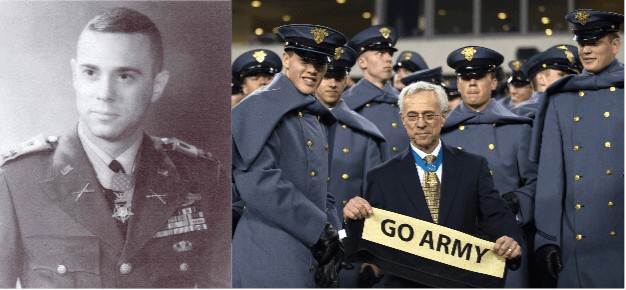
Col. Jack Jacobs, US Army
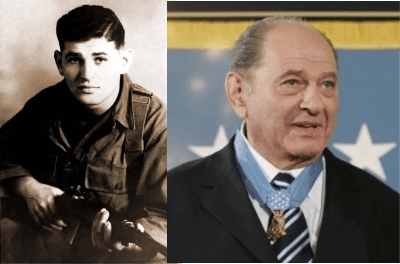
Sgt. 1st Cl. Chris Celiz
US Army
“What’s a nice Jewish kid like you doing serving in the military?” Almost every Jewish servicemember who has served since the end of the draft has heard
some form of this question. There is a simple answer to the question: Jews have served in the United States military since the founding of the Army, Navy and Marine Corps in 1775. Historically, Jews have served at least in part because we believe that we owe a debt of gratitude to the nation that has given Jews more freedom and opportunity than any other in the diaspora.
Jewish servicemembers have distinguished themselves defending our freedom in every conflict our nation has fought. Nineteen Jews have been awarded the Medal of Honor, our nation’s highest military decoration. In the American Revolution, Mordecai Sheftall, born in Savannah, Georgia to Jewish immigrants from England, rose to the rank of colonel and was imprisoned on a British warship, where he refused the pork he was given to eat. After the war, he donated the land for the Jewish cemetery in Savannah.
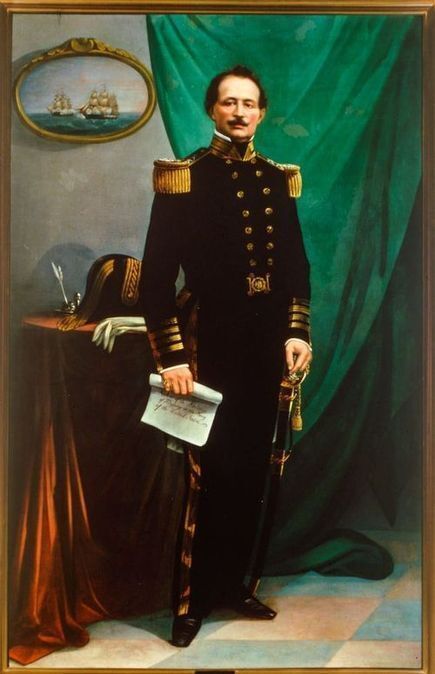
Uriah Levy, a Jewish boy from Philadelphia, ran away from home in 1802 at age 10 to join the US Navy—but returned home for his bar mitzvah. Levy fought in the War of 1812 and spent 16 months as a British prisoner. He rose to become the Navy’s first Jewish commodore and commanded the Mediterranean Fleet. The building complex housing the synagogue at the United States Naval Academy is named for him.
In the Civil War, around 7,000 Jews served, over four percent of the American Jewish population. Six Jews served as general officers in the United States Army. Rabbi Joseph Frankel, an immigrant from Germany, became the first Jewish chaplain in the Army, after President Lincoln interceded with Congress to amend the law mandating that only Christian clergymen could serve as Army chaplains. Benjamin Levy, a drummer boy with the First New York Infantry, became the first Jewish soldier to receive the Medal of Honor.
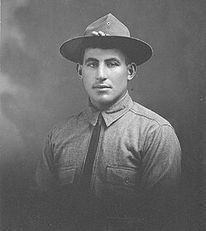
About 250,000 Jews served in the American military during World War I, seven to eight percent of the country’s Jewish population. Sgt. William Shemin, a forester from Bayonne, New Jersey, was wounded several times as he braved enemy fire to rescue wounded soldiers. His heroism was eventually recognized with the award of the Medal of Honor, which his daughter, Elsie Shemin-Roth, accepted from President Barack Obama in 2015.
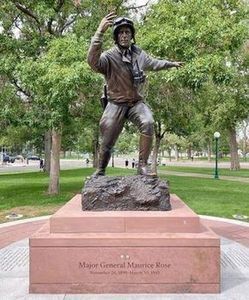
During World War II, between 11 and 12 percent of the Jewish population—550,000 Jews—served in the American military. Maj. Gen. Maurice Rose, the son and grandson of rabbis and a career soldier, overcame a culture of antisemitism to command the Third Armored Division. Killed in action in Germany in 1945, Maj. Gen. Rose is widely recognized as the most effective armored division commander in the US Army in World War II and is the most decorated tank unit commander in US Army history. Capt. Benjamin Salomon eventually received the Medal of Honor posthumously for his heroism in the South Pacific, after the Army decided that, after all, his decision to man a machine gun in defense of his regiment was permissible for a medical professional. He is the only military dentist to receive the nation’s highest military recognition.
Over 300 rabbis served as chaplains in the US Army and US Navy during World War II. Chaplain (1st Lt.) Alexander Goode, a rabbi who was born in Brooklyn and raised in Washington, DC, is immortalized as one of the Four Chaplains who went down with the troop ship USAT Dorchester in the North Atlantic in 1942. Along with a Catholic and two Protestant Army chaplains, Chaplain Goode gave up his life jacket and gloves to soldiers abandoning the ship after it was struck by a torpedo. The four chaplains linked arms and perished together. In 1944, a US Army rabbi, Chaplain (Capt.) Sidney Lefkowitz, and a Jewish infantryman, Pfc. Max Fuchs, an immigrant from Poland who was studying to become a cantor when he was drafted, conducted the first Jewish service on German soil since Hitler had banned Jewish worship in the 1930s.
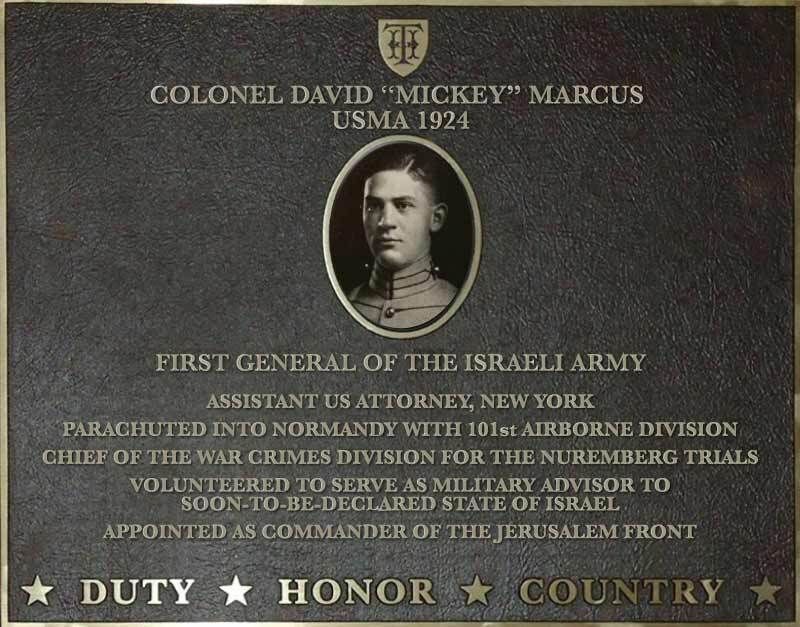
Col. David “Mickey” Marcus, a West Point graduate from Brooklyn, returned to active duty when his New York National Guard unit was federalized in 1940. Col. Marcus parachuted into France with the 101st Airborne Division on June 5, 1944 and later helped oversee the Nuremburg trials as a Pentagon staff officer. Approached by David Ben Gurion in 1947 to help organize and train the nascent Israeli army, Marcus became Israel’s first general, a title not held by the commander of a Jewish army since Bar Kochba. Marcus was killed near Jerusalem in 1948 and is the only soldier buried in the West Point cemetery who died fighting under the flag of another nation.
In the Korean War, US Army Pvt. Tibor Rubin, a Holocaust survivor, singlehandedly covered his company’s retreat. Later taken prisoner, he would escape from the prison camp at night, forage for food, and bring the food back to his fellow prisoners because he considered it a mitzvah—a divine commandment. Nominated more than once for the Medal of Honor, the recommendations were mysteriously lost by Rubin's antisemitic first sergeant. It took Congress to intervene, but the slight was rectified in 2005 when Rubin received the Medal of Honor from President George W. Bush.
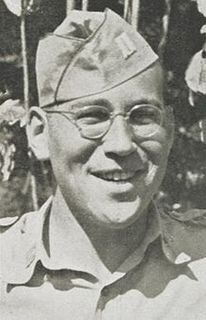
Capt. Jack Jacobs received the Medal of Honor for gallantry in combat in Vietnam. He retired from the Army as a colonel and went on to a successful career in the financial industry and as a television military commentator. The only living Jewish Medal of Honor recipient, Col. Jacobs is an actively involved speaker about Jewish military service. Sgt. 1st Class Christopher Celiz, a US Army Ranger, received the Medal of Honor posthumously for heroism in Afghanistan.
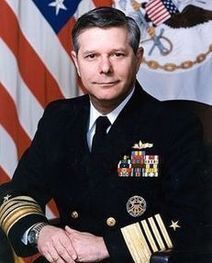
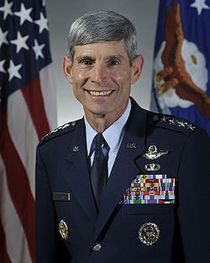
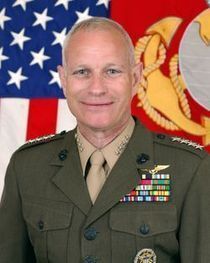
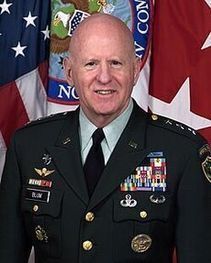
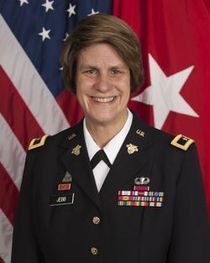
Apart from battlefield heroism, Jews have made other great contributions to our nation’s military. Adm. Hyman Rickover (born Chaim Rykower in Poland), was the father of the modern nuclear Navy. Gen. Norton Schwartz, an Air Force Academy graduate, served as the chief of staff of the Air Force. Adm. Jeremy Michael Boorda served as the chief of naval operations. Gen. Robert Magnus served as the assistant commandant of the Marine Corps. Lt. Gen. H. Steven Blum served as the chief of the National Guard Bureau, the highest-ranking officer in the National Guard. Lt. Gen. Sidney Weinstein is credited with transforming the Army’s intelligence system, and Maj. Gen. Robert Solomon (an operatic tenor who in his youth thought seriously about becoming a cantor) is likewise credited with transforming the Army’s public affairs operations. Brig. Gen. Cindy Jebb, another West Point graduate, earned a Ph.D. and became the first Jewish woman general officer in the Army and the first woman dean (chief academic officer) at West Point; after retirement, she serves as the president of Ramapo College of New Jersey.
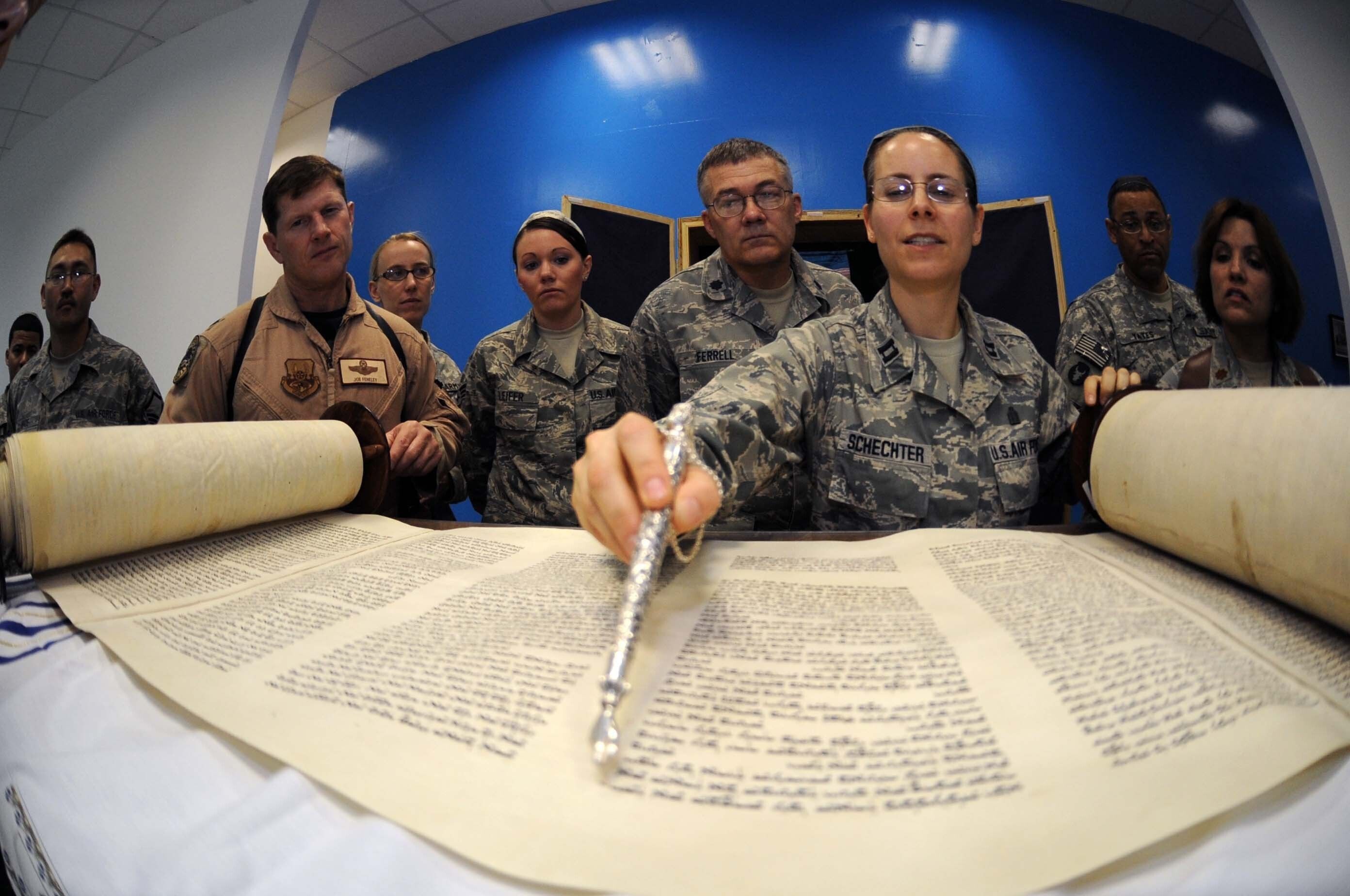
Today, some 15,000 Jews serve in all branches of the military, including the active military, Reserve, and National Guard. That number represents a significant decrease in the proportion of our Jewish population that serves in uniform. Even so, all of these Jewish soldiers, sailors, airmen, Marines, guardians, and Coast Guardsmen serve our nation proudly and continue to repay the debt the Jewish community owes to the United States of America.
-
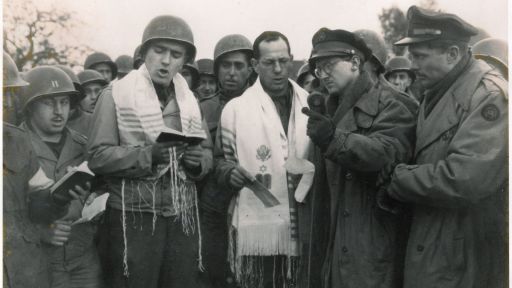
Chaplain (Capt.) Sidney Lefkowitz and
Pfc. Max Fuchs, US Army
Leading Services Near Aachen, Germany
October 29, 1944
